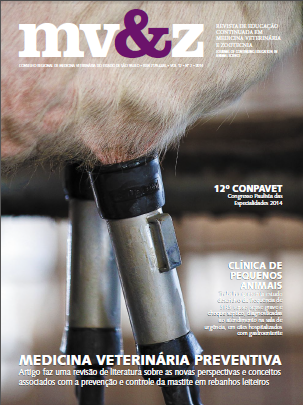
New perspectives and concepts associated with the prevention and control of mastitis in dairy cattle: review of literature
DOI:
https://doi.org/10.36440/recmvz.v12i2.23920Abstract
The classification of the causative agents of bovine mastitis regarding its transmission route as contagious or environmental may vary due to the differences of micro-organisms strains behavior within the species. Some pathogens classified as contagious have shown environmental transmission behavior, whilst pathogens earlier classified as environmental have shown adaptability to the host. Furthermore, the control and distribution of mastitis pathogens in the herds have been influenced by changes in the dairy industry, particularly regarding the milk production systems. Most high-producing dairy farms have changed from extensive or semi-extensive systems to intensive cattle farming or confinement raising systems. Currently, in countries with developed dairy production, it has been observed a reduction of mastitis caused by contagious pathogens and an increase of intramammary infections caused by environmental and minor pathogens. The present literature review aims to examine concepts and perspectives regarding the prevention and control of mastitis in dairy herds, especially those related to mastitis caused by environmental and minor pathogens.
Downloads
Published
Issue
Section
License
1. Autores mantém os direitos autorais e concedem à revista o direito de primeira publicação, com o trabalho licenciado sob a https://creativecommons.org/licenses/by/4.0/.
2. Autores têm autorização para assumir contratos adicionais separadamente, para distribuição não-exclusiva da versão do trabalho publicada nesta revista (ex.: publicar em repositório institucional ou como capítulo de livro), com reconhecimento de autoria e publicação inicial nesta revista.
3. Autores têm permissão e são estimulados a publicar e distribuir seu trabalho on-line (ex.: em repositórios institucionais ou na sua página pessoal) a qualquer ponto antes ou durante o processo editorial, já que isso pode gerar alterações produtivas, bem como aumentar o impacto e a citação do trabalho publicado (Veja O Efeito do Acesso Livre).
How to Cite